
Shadow IA: when employees use AI without telling anyone
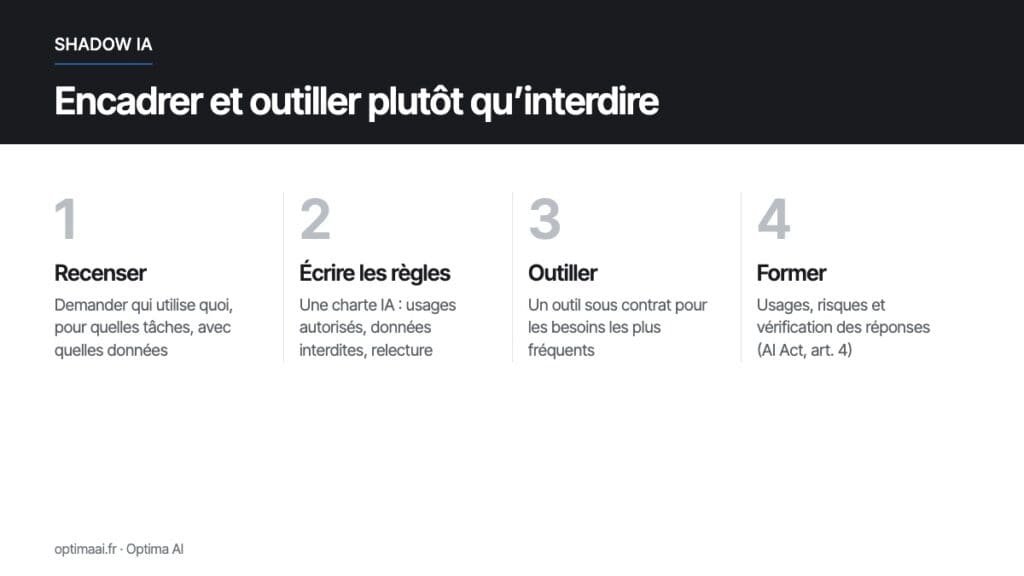
Shadow AI is the use of AI tools by employees without a framework set by the company. Why it appears, its risks, and how to manage it: identifying, writing the rules, equipping, training, consulting the Works Council.
AI hallucinations: why it is wrong, how to protect yourself
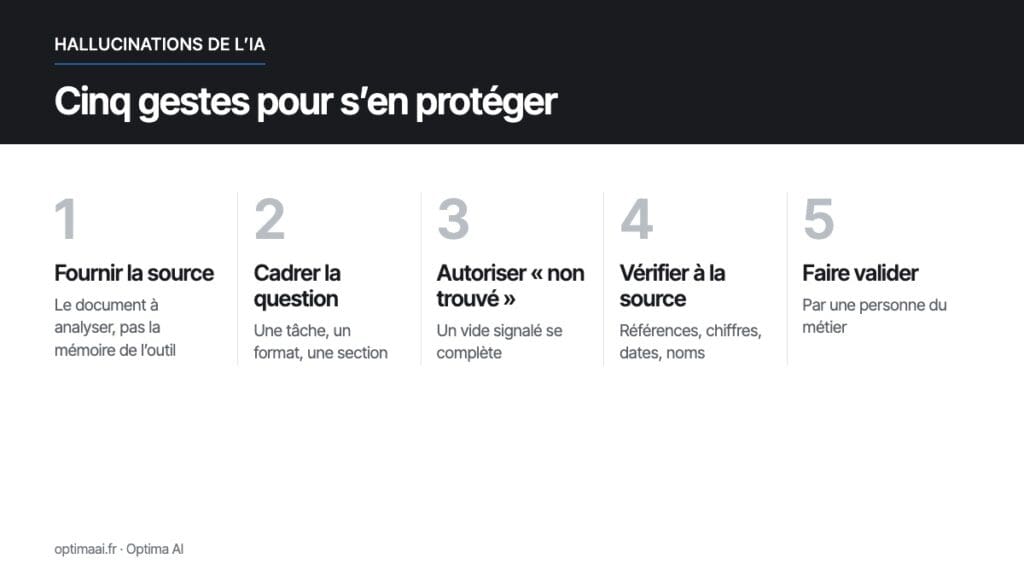
What is an AI hallucination, why generative AI tools generate responses, the three forms to look out for in the workplace, who is responsible for them, and five steps to protect yourself.
AI and GDPR: using AI on personal data in the workplace

What the GDPR requires when a company uses AI on personal data: prohibited data, subcontracting agreement, impact analysis, human decision-making, alignment with the AI Act, and an eight-point checklist.
Which AI to use in the company: ChatGPT, an integrated tool or a business agent?
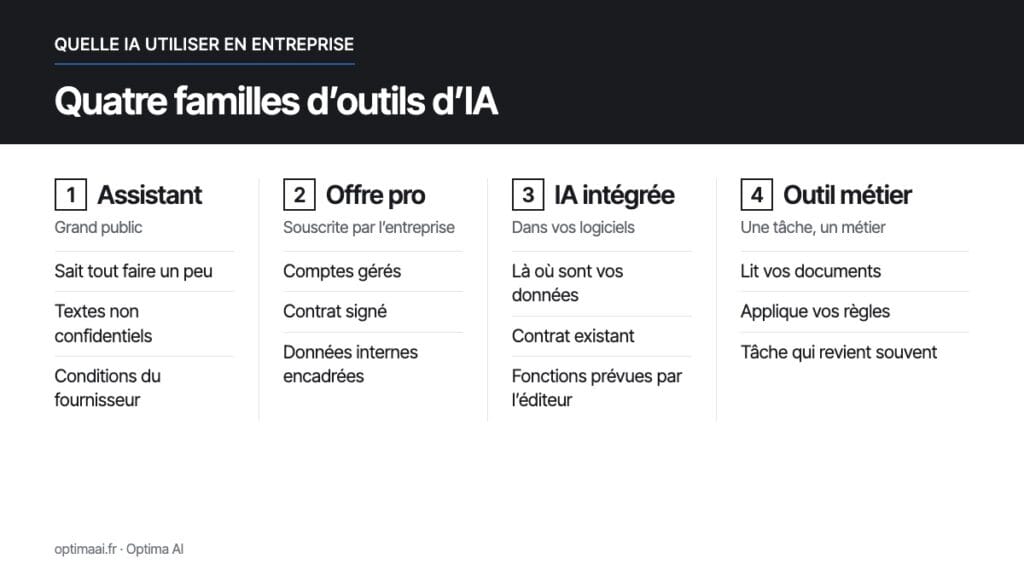
General public assistant, professional offering, AI integrated into your software or business agent: how to choose which AI to use in the company, task by task, and the rules to know.
Mandatory AI training in companies? What the AI Act says since July 2026
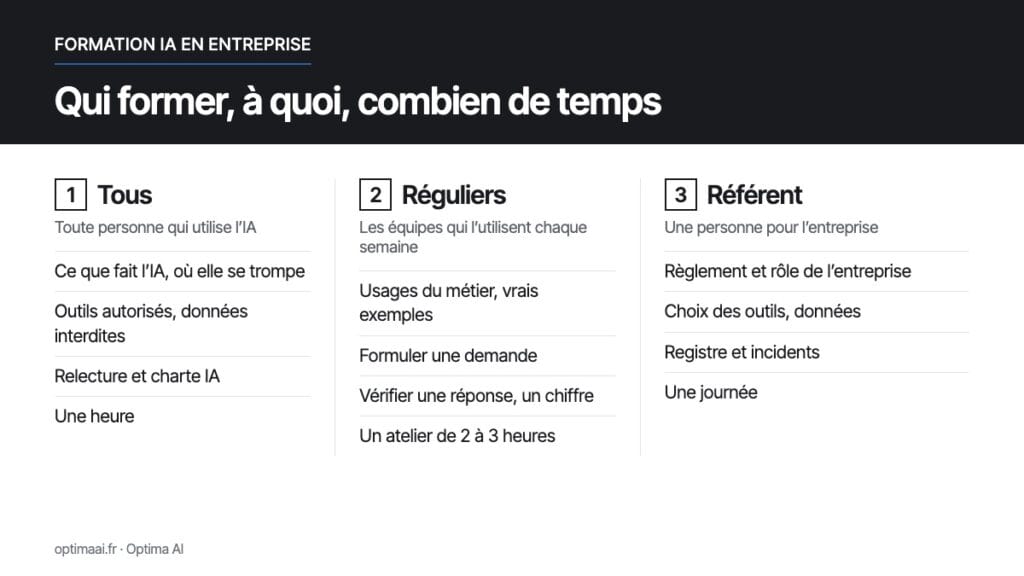
The AI Act does not impose certification training or a level to be reached: its Article 4, as drafted in July 2026, calls for measures to promote the mastery of AI. Who to train, what, for how long, and how to document it in a SME.
Agent IA in the workplace: what it is, what it does, and concrete examples
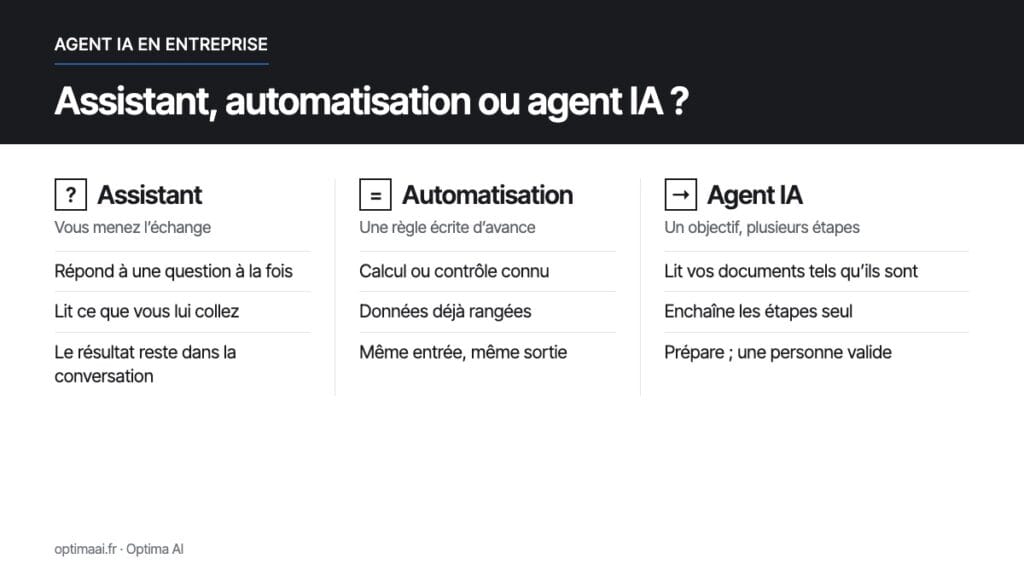
An AI agent receives a task, reads your documents and alone carries out the steps of a task; a person in the field validates it. Definition, difference with an assistant or automation, examples by profession, tests to see if a task is suitable, and what the European regulation on AI says.
AI Charter in the workplace: complete model and updated rules
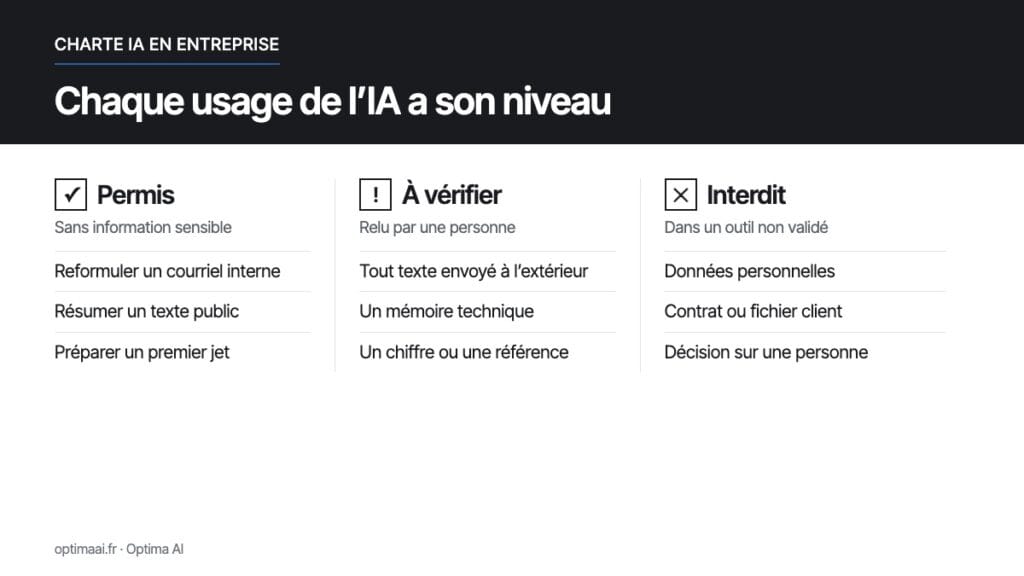
An AI charter tells your teams which AI tools to use, for what purpose and with which data. Complete model in Word and updated rules (AI Act amended in July 2026).
Integrating AI in SMEs: where to start?
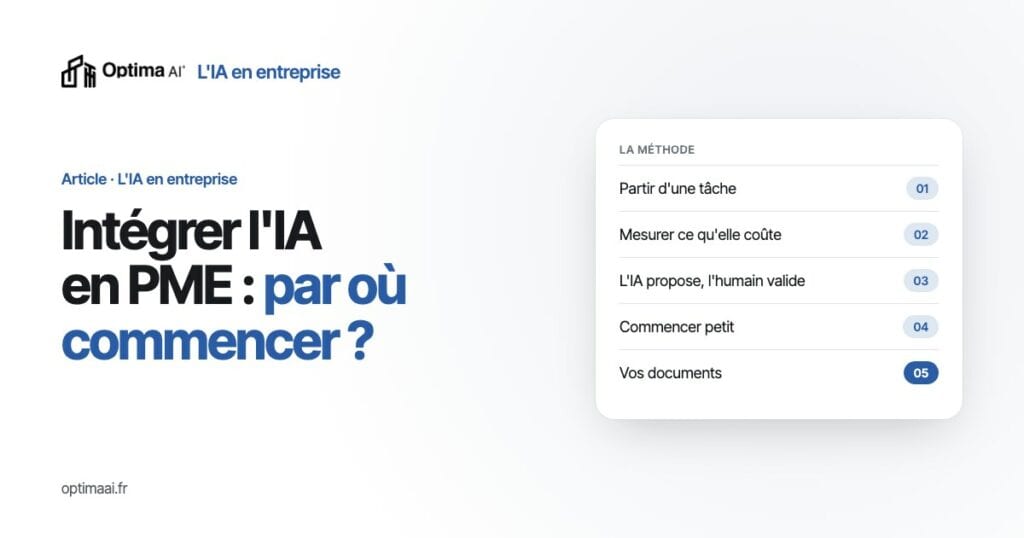
Where to start with AI in SMEs? With a specific task, not with the technology. The five-step method, and three cases taken from our webinar.
 French
 English