
Why does responding to a tender take so much time?
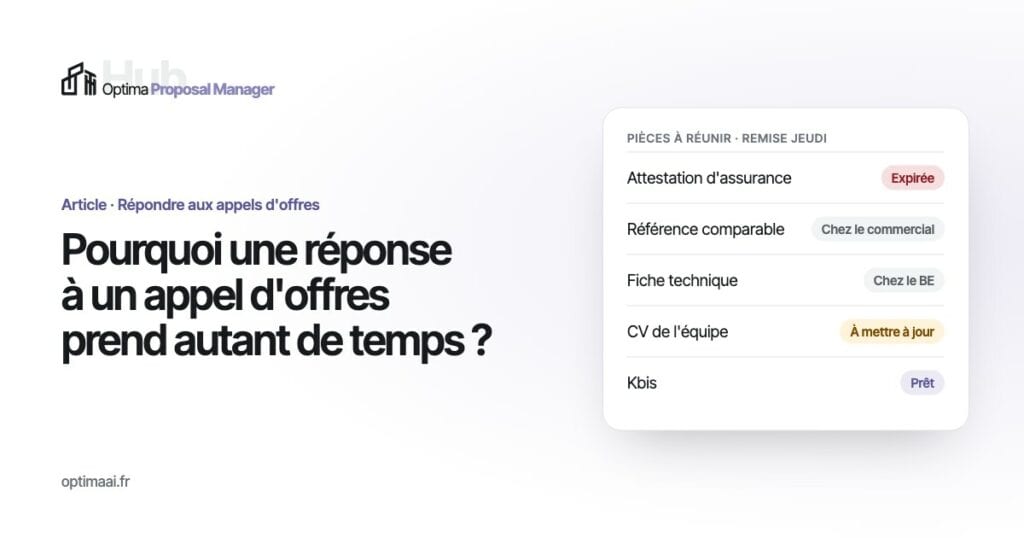
The time spent on a tender response does not just go into writing. It goes into gathering: tracking down the right certificate, the latest version of a technical data sheet, the reference that can be cited, from the person who holds them. A document repository kept up to date between responses avoids re-doing […]
EN ISO 20607: What the standard says about the machine instruction sheet
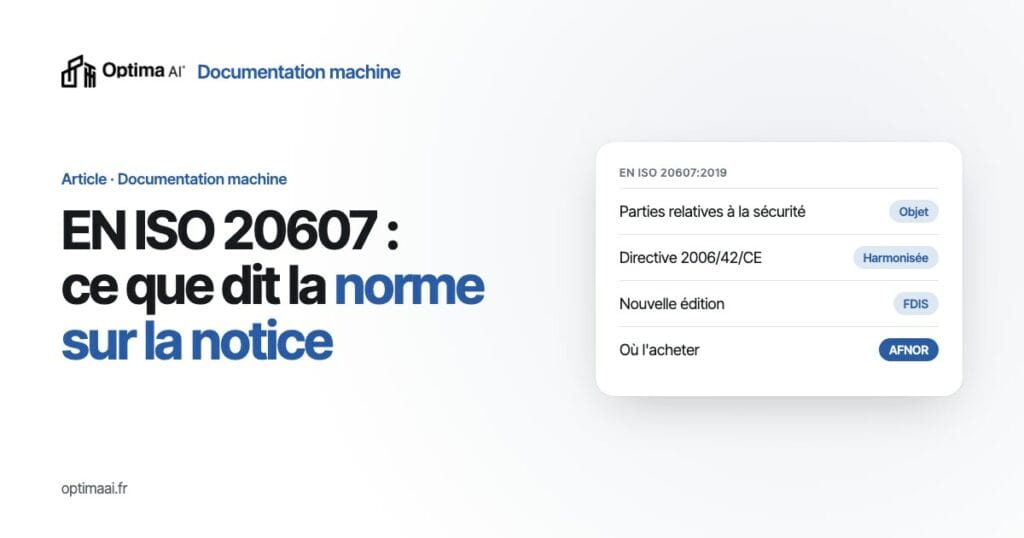
EN ISO 20607 sets requirements for the manufacturer regarding the preparation of the parts of the instructions for use related to safety: their content, structure and presentation, throughout the entire life cycle of the machine. The regulatory requirements regarding the instructions themselves, however, come from Directive 2006/42/EC and, starting from 20 […]
How to respond to a tender, public or private?
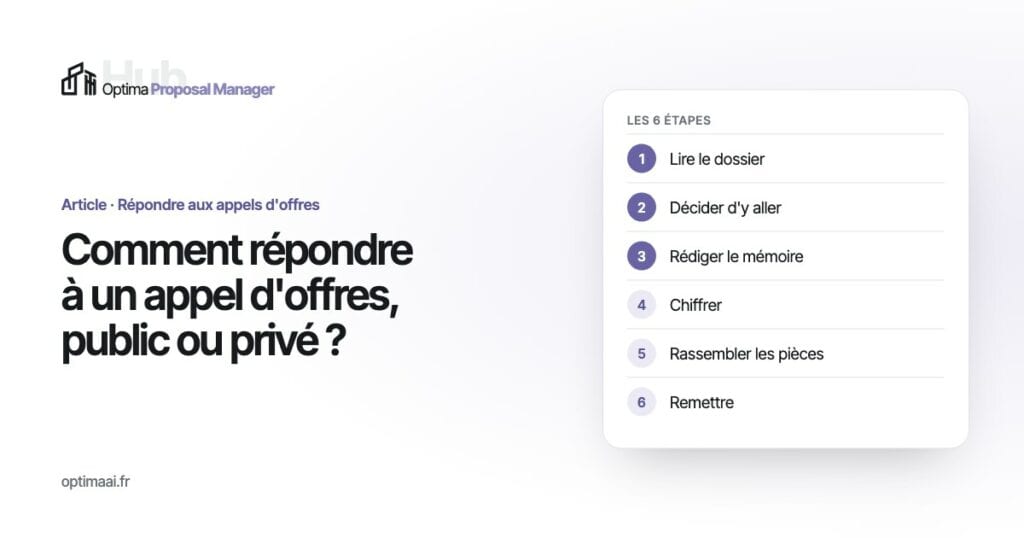
To respond to a tender, whether public or private, you always follow the same path: read the file, decide to go for it, write the technical memorandum, cost it up, gather the administrative documents, and submit. Public procurement imposes its own rules and forms; private procurement lets the buyer set theirs. In both cases, on the [...]
DC1, DC2, DUME: which administrative documents are needed to respond to a tender?
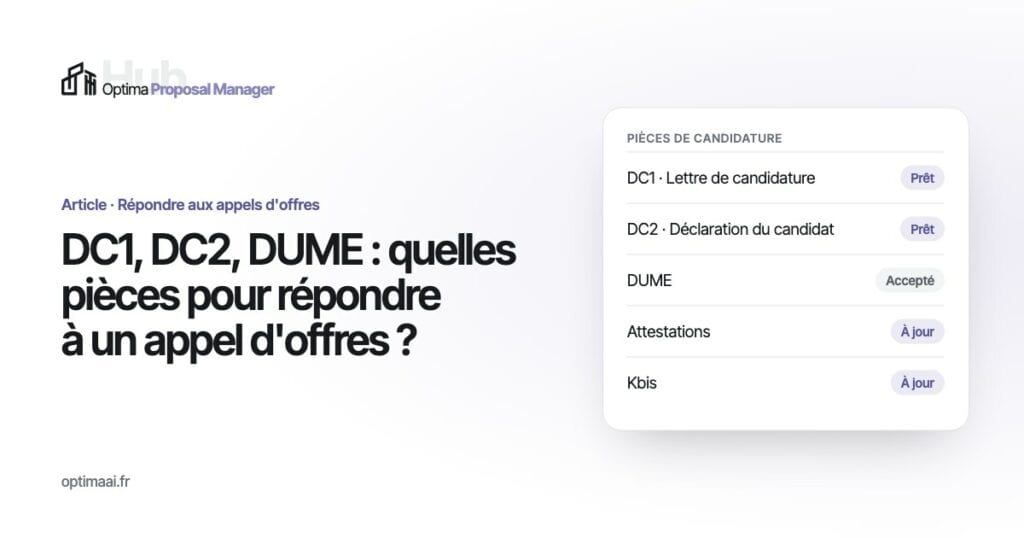
The DC1 is the tender letter: it states who is bidding, either individually or as a group. The DC2 is the candidate's declaration: it presents their economic, financial and technical capabilities. The ESPD is a European form that can replace both. The consultation regulations state what the buyer expects. In short […]
Instruction notice: what the Machinery Regulations 2023/1230 change
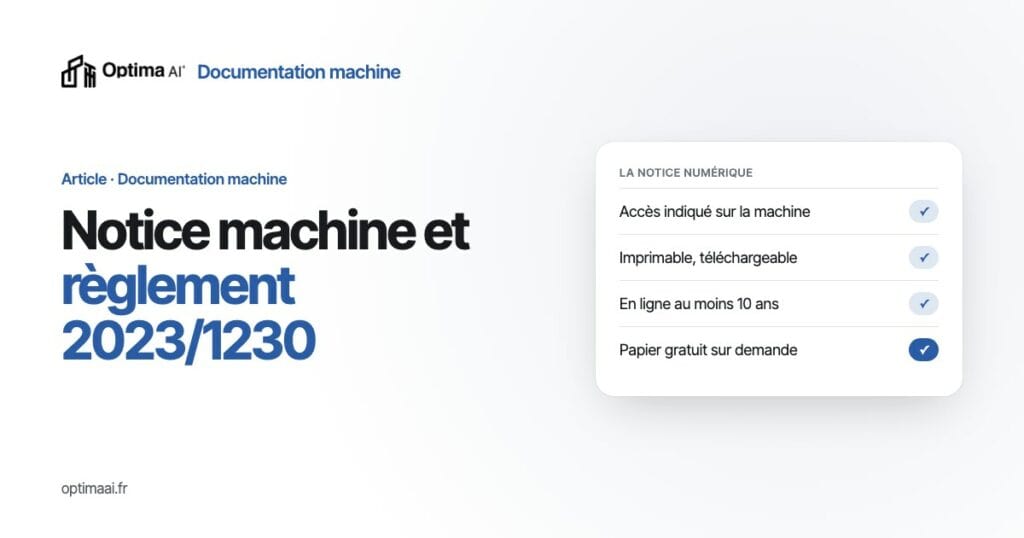
Regulation (EU) 2023/1230 sets out explicit conditions for the digital instruction manual: access to the manual is indicated on the machine, the manual can be printed, downloaded and saved, it remains online for at least ten years after being placed on the market and for the entire planned lifetime of the […]
Method statement: what does the buyer actually score?
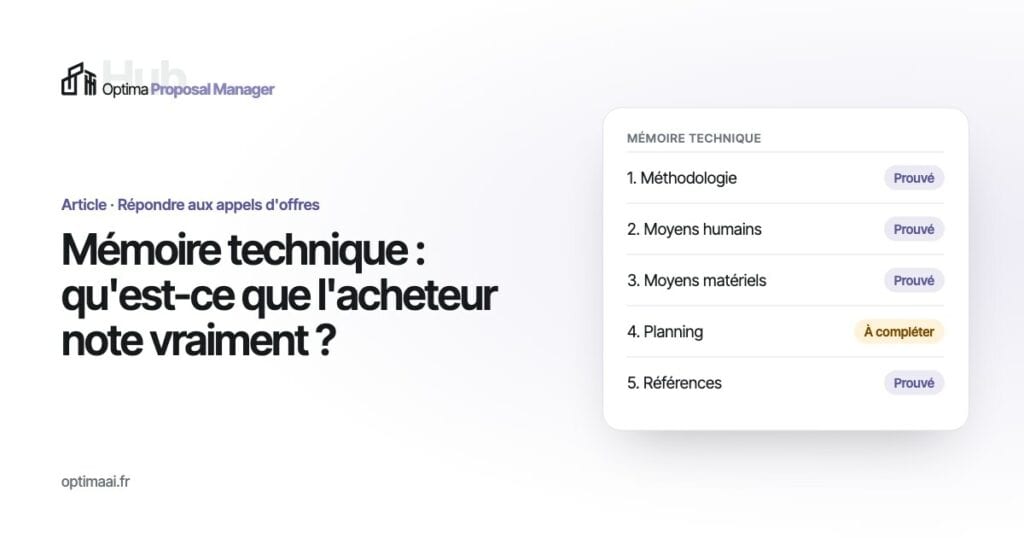
The buyer scores the technical method statement criterion by criterion, according to the criteria and sub-criteria they have announced. A method statement that follows this order and proves every assertion (resources, methods, references) gives itself every chance of scoring the points. Text copied word-for-word from a previous tender loses them, even if well written. In short, the method statement [...]
Machine instruction sheet: what it should contain, and how to prepare it
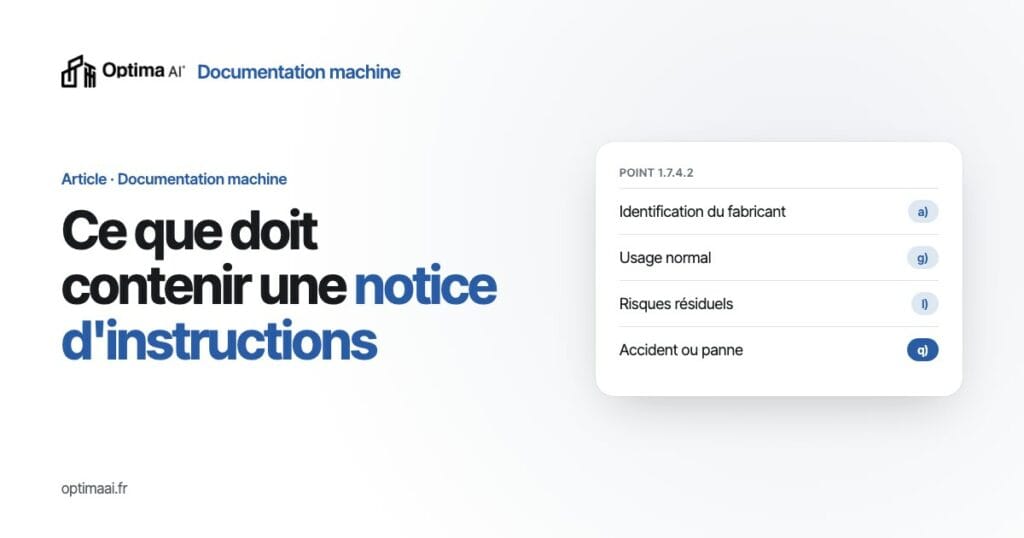
Regulation (EU) 2023/1230 sets out explicit conditions for the digital instruction manual: access to the manual is indicated on the machine, the manual can be printed, downloaded and saved, it remains online for at least ten years after being placed on the market and for the entire planned lifetime of the […]
How to analyse a tender dossier (DCE) before deciding whether to bid?
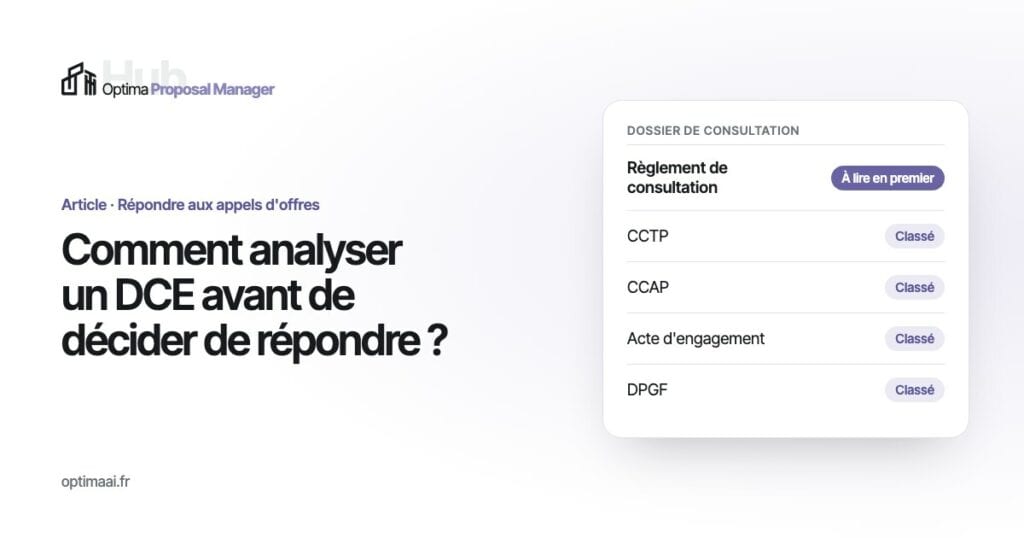
To analyse a tender dossier (DCE), start with the consultation regulations rather than the specification document: that is where you will find the award criteria and their weighting. Then, note down each required document and each knockout criterion. If a knockout criterion cannot be met either by you or a partner, the […]
Security card at the workplace: is it mandatory? What the Labour Code says.
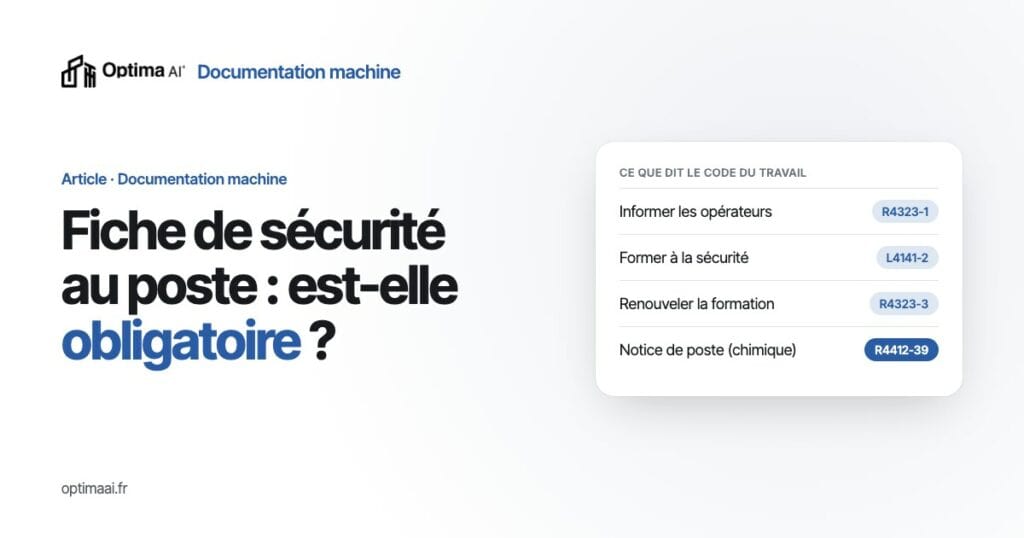
Not under that name. The Labor Code requires the employer to inform workers who use or maintain a machine (article R4323-1) and to train them in safety (article L4141-2). The safety card at the workplace is a means of making these instructions readable in front of the machine. In short, the obligation concerns information and […]
 English